
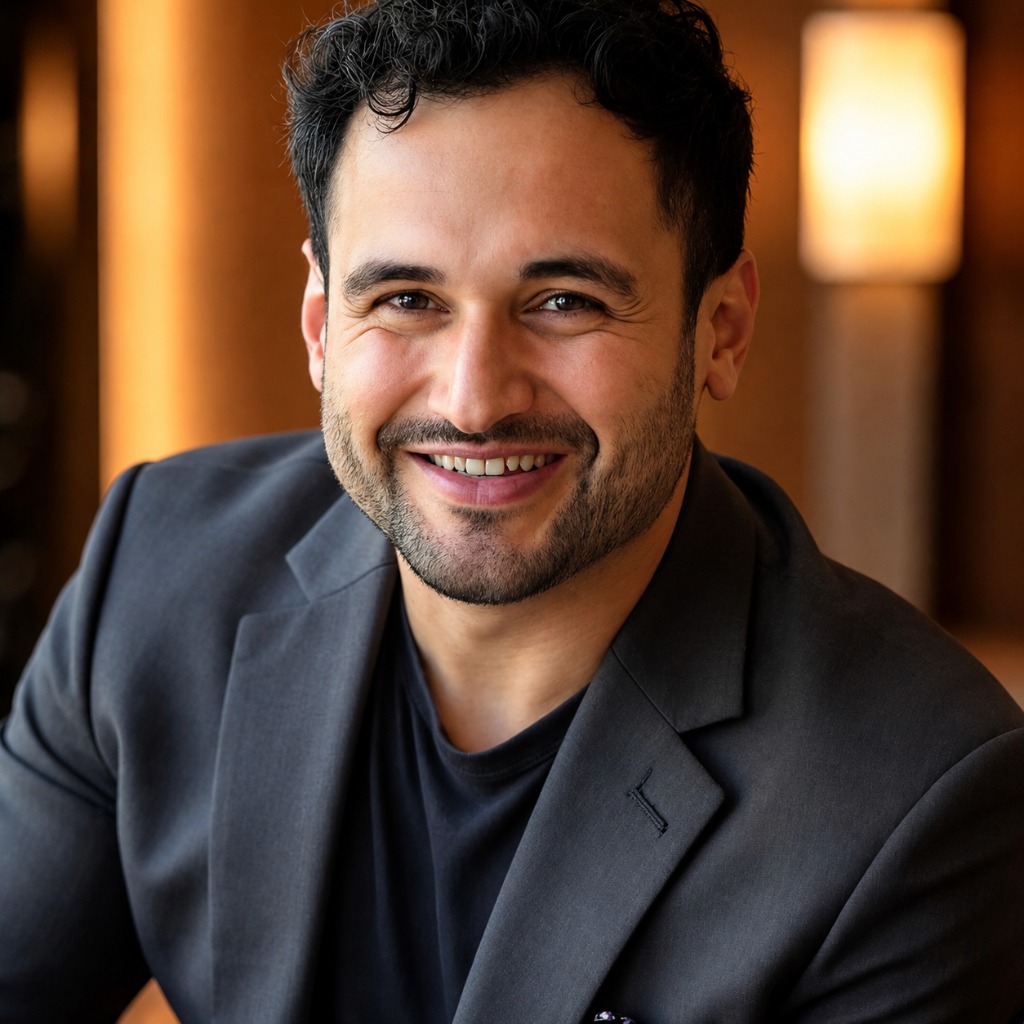
Farzad Khosravi
3x founder. Fractional COO and CTO.
Every company I have operated inside, and what changed.
I take an operating seat inside early-stage companies, usually as fractional COO or CTO. I own a function until it runs without me. Here is the whole record. Numbers attached.
3x
founder, one exited
9
companies, idea stage to $120M Series C
$9M to $25M
Revenue. Flightfox
$8.5M
Seed raised. Humoniq
300+
founders coached
$500k
Revenue within 6 months. Traversaal
$2M
Seed raised. Chief Rebel, at Antler
4.98 / 5
across 171 reviews on GrowthMentor
Built from zero to one:
7
products
8
GTM teams
5
engineering teams
4
agentic AI products, 3 of them raised
The record
Nine companies. Every row links to the story behind it.
Flightfox 
YC 2012 Coach, then operating partner $25M
revenue, up from $9M in 14 months
Zero to 100+ enterprise leads. One new hire and no extra marketing spend.
Read the story Humoniq
YC S25 Fractional COO $8.5M
seed raised during the batch
Same founder as Flightfox. He brought me in for the second company.
Read the storyTraversaal
AI search Fractional CTO and COO$500k
first-year revenue
Hired and ran the engineering team. Shipped the agentic AI product from zero to one, with TripAdvisor as a customer.
Read the storyChief Rebel
Antler Fractional CTO and COO$2M
seed raised at Antler
Built the product team, managed the sales team, shipped zero to one, then ran the pivot and owned company strategy.
Read the story Sorcerer
YC Sales and GTM coach $3M
pipeline in six months
Built the enterprise sales system, revived a dormant account inside a week, and took sales from one founder to two people plus cold calling.
Read the storyODQS and Bricks & Bytes
Construction tech Coach$800k
raised
Worked with him on the social and sales hires, and on building out the product and sales function.
Read the storyTellos
Founder is a YC alum CoachHelped the CEO decide who to hire and who to let go, then how to run the people who stayed. OKRs, strategy, the accountability cadence, and the sales funnel.
Read the storySLS3 and Audenza
Ecommerce Coach$1.3M
revenue, up from $800k in 12 months
Six-figure investor backing landed in the same stretch.
Read the storyNylas
$120M Series C Director, Customer SuccessBuilt Customer Success from zero to a full organization through the company's Series C.
One founder hired me twice, at two different companies
Todd Sullivan
Founder, Flightfox and Humoniq
$25M
Flightfox revenue, up from $9M
100+
enterprise leads, up from zero
$8.5M
Humoniq seed at YC S25
Todd Sullivan founded Flightfox and went through YC in 2012. By 2023 COVID had wrecked it. Churn was out of control, the quick fixes had stopped working, and the company was on life support. His team had written off personas and validation as a waste of time.
I pushed him back to first principles. We stripped out years of assumptions and re-validated who actually needed Flightfox and why. Fourteen months later revenue went from $9M to $25M. Enterprise leads went from zero to more than 100. That took one new hire and no additional marketing spend.
He founded Humoniq next. He brought me in as fractional COO through the YC S25 batch, and the team raised an $8.5M seed.
I am telling you these are the same person on purpose. Two logos from one relationship is not two proofs. It is one founder who watched me work for 14 months and then handed me an operating seat at his next company. Read it as one data point. It is the one I would want you to weigh most.
A technical YC founder with 100+ meetings and no way to close them

Austin Tindle
CEO, Sorcerer
$40k
booked monthly
$3M
pipeline in six months
200
dormant accounts back in rotation
Austin Tindle runs Sorcerer. His outbound was working. Cold email was pulling 10 to 20% response rates, and over nine months the team had sent about 1,500 messages and booked more than 100 meetings. Everything downstream leaked.
None of the founders had sold to enterprise or government before. Calls went muddled after the first meeting. Prospects sat for six months saying they would talk to their boss. Pipeline lived in Notion and depended on Austin remembering to follow up between conference travel and engineering work. His own read on the demo was that it was weak. It proved the technology worked. It never connected that to a dollar in the buyer's business.
The first thing I told him was to stop working on the top of the funnel. When outbound already pulls 20%, adding a content channel is a way to avoid the real problem.
Then we rebuilt the rest. A fuzzy ICP became named hypotheses, each one with a fake-door test and a disqualifying question behind it. The sales conversation moved off the dataset and onto the economics. It opened with the question that mattered most: what are you paying for this right now? Austin had a polished playbook for fundraising and pure instinct for sales, so we built him the missing half. Call playbooks. A scoring rubric. Recorded calls, scored against it. Every open deal got a required next action, every day. And roughly 200 dormant accounts went back into rotation.
Four weeks in, he called it a level up. He had closed a customer out of that dormant list. That account went from cold to a booked call in under a week. Two people were on sales full time. Cold calling was live and working, a channel they had never tried. Pricing and segments were running as real experiments. When I asked what might stop them now, he could not name anything. He just needed reps.
He got them. Within six months Sorcerer was booking $40k a month with $3M in pipeline.
I coached a Google AI scientist out of Google, then built his company with him

Hamza
Founder, Traversaal
$500k
first-year revenue
TripAdvisor
first named customer
Hamza was a professor and an AI scientist at Google. The coaching work was getting him to leave. Then I became his fractional CTO and COO.
I hired and managed the engineering team, and we built the agentic AI search product from zero to one. First-year revenue hit $500k with TripAdvisor as a customer.
Then he could not raise, in the same window Glean raised $260M in the same category. Real revenue, a real logo, and a story that would not land. That is the part of the job most technical founders underestimate, and it is why I do not treat fundraising and operating as separate problems.
Idea in January, $2M raised, and I owned the strategy after that

Kinza Azmat
Founder, Chief Rebel
Antler
accepted into the program
$2M
seed raised
Kinza Azmat had the idea in January. By November she was in Antler. We worked one on one on the pitch and the investor calls, and the piece that moved was narrative. She raised $2M.
Then I took the fractional CTO and COO seat at Chief Rebel. I built the product team and managed the sales team, and we shipped the product from zero to one.
Then we pivoted it. The product strategy and the company strategy from that point were mine. That is the deepest ownership claim on this page. It is also the easiest one to check, so ask her.
Three more
Sahle Hashelit
Founder, Tellos. YC alum.
He arrived with scattered spreadsheets and too many ideas. The work was his executive team. Who to hire, who to let go, how to manage the ones who stayed, and how to hold them to something. We set the OKRs and the strategy together, then the sales funnel underneath. He made every call himself. His words: that was the first time someone helped him untangle the mess in his head and turn it into something he could act on.
Owen Drury
Founder, ODQS and Bricks & Bytes
Two companies. Successful on paper, drowning underneath. We raised $800k, then worked through the social and sales hires and the product and sales function behind them. He co-hosts a top construction tech podcast now. He earns more than he ever has.

James Cissel
CEO, SLS3 and Audenza
Revenue went from $800k to $1.3M in 12 months. Six-figure investor backing landed in the same stretch.
What I ask in the first session
No mystery to it. Most founders I meet can describe their product for ten minutes and cannot tell me what the problem costs the buyer. That gap is where the revenue is.
- 1 What are you paying to solve this today?
- 2 What is the problem costing you if nobody fixes it?
- 3 What do you get on the other side, in dollars?
- 4 Who else has to say yes, and when do we reconvene?
- 5 What would have to be true for me to tell you this segment is dead?
Austin told me the first one became his fastest way to sort a prospect into qualified or not. The last one is the one founders hate. Refusing to kill a segment is how nine months disappear.
Why I work on behavior
Companies rarely die of a bad strategy. They die because nobody told the founder the truth in time.
Gallup put global engagement at 20% in 2025, the lowest since 2020. A CEPR field experiment across more than 1,000 teams in 2025 found that manager one-on-ones about people's psychological needs made teams measurably safer to speak up in. The ones focused on task execution did nothing. So the standard fix, more status meetings, is the one that does not work.
The metric I care about is time-to-bad-news. Count the days between the first person knowing something is broken and the person who can fix it hearing about it. At Flightfox that number was long enough that the team had already written off validation before I arrived.
I wrote a book about this. The Primal Trap is the long version.
Bring me the thing that is actually stuck.
Thirty minutes. Tell me where the leak is and I will tell you what I would do about it. If I am the wrong person for it, you will know inside 20 minutes and I will point you at someone better. If that is all you needed, keep it and go build.
Book a free strategy call4.98 out of 5 across 171 reviews on GrowthMentor. Read the worst ones first. Or read how I got here.