
The Startup Growth Playbook
The channel that worked for someone else's company at someone else's stage won't work for yours. A stage-keyed framework for picking the right one.
Written for founders who keep picking channels that fit a company they don't have yet. About 12 minutes to read. No signup.
The brutal part of channel-picking nobody says out loud
Most founder advice about growth assumes there's a right answer, and the work is to find it. The harder truth: there's a right answer for your stage, and the work is to figure out which stage you're actually in. Founders don't blow channel selection by picking the wrong channel. They pick a channel that would have been right for the company they had six months ago, or the company they hope to have in six months. Neither company is the one shipping today.
What works at $0 in revenue does not work at $100K MRR. What works at $100K does not work at $1M. The channel that built the case study in the blog post you read last week was running at a different stage, in a different market, with a different founder. Most of the time, copying it is the move that costs you the next quarter.
This page is the playbook I use with coaching clients when they sit down to decide what to do next. It's organized around the only question that matters: which channel fits the stage I'm actually in, and what's the failure mode if I pick wrong?
The playbook covers seven channels, each linked to the longer write-up if you want the inside of that channel rather than the channel-selection layer. Read this page first. Then click into the one that matches your stage.
The framework: channel by stage by constraint
Every channel has a stage where it works, a constraint it requires, and a named way it fails if you pick it for the wrong stage. The framework is four questions: What stage am I in? What constraint do I have? Which channel fits both? What's the failure mode if I'm wrong about either?
Content marketing: pre-PMF to post-PMF, when you have time more than money
Stage: works from day one through about $1M ARR. Pays off the longest of any channel on this list, but pays off slowly. Constraint: you need a real point of view on a topic the audience already cares about, and the willingness to publish weekly for six to twelve months before the curve bends.
Named failure mode: writing opinion pieces without an audience hypothesis. You write four months of essays into a void, conclude content "doesn't work," and switch channels in month five. That's the month the first essays would have started ranking if you'd kept going.
The hard part isn't writing. It's deciding what to write about and who you're writing to before you start. The longer write-up on a content marketing strategy that sells covers the audience-hypothesis question first. Picking the topic before picking the reader is the most common reason a founder's content produces nothing.
Reddit and community channels: pre-PMF, when your audience is dense in one place
Stage: strongest in the pre-PMF window when you're hunting for early adopters, fades fast as a primary channel once you cross $50K MRR. Constraint: the audience has to actually live there. Reddit works for some categories (founder tools, dev, hobbyist verticals) and is dead air for others (enterprise procurement, healthcare ops, anything with a long sales cycle).
Named failure mode: treating Reddit as a megaphone instead of a room. Founders post the same launch pitch to twelve subreddits, get downvoted into oblivion, conclude the audience is hostile. The audience isn't hostile. They're hostile to spam. The channel rewards specific, useful contribution from a real person who participates before they post.
A working example with numbers attached: the post on hitting the top of Reddit walks through one founder's run. What got posted, what got upvoted, what didn't, and the honest trade-off of the channel.
LinkedIn: post-PMF B2B, when the buyer reads LinkedIn at work
Stage: best from post-PMF through $5M ARR for B2B SaaS with an ACV of roughly $5K or higher. Works less well for consumer, prosumer, or low-ACV tools where the buyer isn't reading LinkedIn during work hours. Constraint: a real ICP (ideal customer profile) you can describe in one sentence, and a founder willing to be visible. LinkedIn rewards a face attached to opinions, not a logo broadcasting.
Named failure mode: posting before ICP exists. Founders run LinkedIn at pre-PMF, get likes from people who will never buy, mistake the engagement for traction, and waste three months building an audience that doesn't convert. LinkedIn likes are not customers. The channel works when the post brings the right buyer to a discovery call, not when it brings strangers to a comment section.
The longer playbook on what LinkedIn looks like after ICP exists is in the LinkedIn guide for founders. It covers posting cadence, the content types that actually convert versus the ones that just earn applause, and the connection strategy that pays.
Cold outbound: post-PMF B2B, when you can describe your buyer in a database
Stage: works post-PMF when you can name the title, industry, and trigger event for your buyer with enough specificity that Apollo or Clay can pull a list of 500 of them in an afternoon. Constraint: a real ACV floor. Sub-$5K ACVs don't justify the human time per response, even with sequencing tools.
Named failure mode: running outbound at pre-PMF. You don't know who the buyer is, so the list is wrong; you don't know what to say, so the message is generic; you don't know what they object to, so the second email lands flat. Outbound at pre-PMF burns warm leads against a script that wasn't ready for them. It's the most expensive way to learn what you should have learned from ten customer calls.
The longer write-up on outbound for early-stage startups covers what changes once ICP exists: the list quality, the sequence design, the reply patterns that signal you're talking to a real prospect rather than a polite no.
Cold email specifically: post-PMF, when the diagnostic matters more than the volume
Stage: a sub-channel inside outbound. Same stage rules as outbound, with one extra rule of its own. Constraint: a sender domain that isn't poisoned, and a willingness to diagnose reply rates honestly. Most "cold email isn't working" diagnoses are surface. The founder doesn't have a deliverability problem. They have a message problem, or an ICP problem, or both. The tooling layer hides which one.
Named failure mode: blaming the channel for a layer underneath it. You ship 5,000 emails, get a 0.4% reply rate, conclude cold email is dead. Cold email isn't dead. Your list was wrong, or your message was about you instead of the buyer, or your follow-up sequence was a copy-paste of someone else's template. The channel rewards founders who can tell the three layers apart.
The diagnostic write-up on why cold email stops converting covers the three failure layers and how to tell which one is yours before you fix the wrong thing.
Video sales letters: post-PMF B2B SaaS, when async beats live
Stage: works once the sales motion is repeatable enough that you can predict the questions a qualified buyer will ask. Constraint: a founder or product lead who can explain the product on camera in under twelve minutes without sounding like a pitch deck reading itself aloud. If the live demo is bad, the recorded version will be worse. Fix the live one first.
Named failure mode: using a video sales letter to replace a sales conversation you haven't earned yet. VSLs work when the buyer is already half-sold and the video closes the gap. They don't work as a first-touch cold play: the click-through is wrong, the watch time is short, the meeting that follows is the wrong stage of the funnel.
The longer write-up on video sales letters for B2B SaaS covers the structure of one that converts, the watch-time benchmarks that mean the message is working, and the failure pattern when the VSL is asked to do work that belongs upstream.
Founder-led sales: pre-PMF through about $1M ARR, when you have no other answer
Stage: the default channel for B2B before any other channel is real. Constraint: the founder has to be willing to take the calls personally. Not delegate to a salesperson, not hide behind a form. Most early enterprise customers buy because the founder picked up the phone and answered the question their AE wouldn't have been able to answer yet.
Named failure mode: hiring a salesperson too early to make founder-led sales someone else's problem. The founder ducks the discovery call, the AE doesn't have the product context to handle the second objection, the deal stalls, and the founder concludes the salesperson is bad. The salesperson isn't bad. The company wasn't ready to hand off the conversation yet.
The deepest read on this is the founder-led sales playbook. It covers when it's the right channel, the discovery-call structure that converts, and the named test for when you're finally ready to hand it off.
Seven channels. Each one matches a specific stage and a specific constraint. The work in front of you is not to pick the one that worked for someone else. It's to read the failure modes honestly and figure out which one is most likely to be yours if you pick wrong.
What founders blow at the stage gate
Four mis-pairings I see often enough that they're worth naming. Pick the one closest to a Tuesday you've had.
1. Running outbound at pre-PMF
The most common one. The founder reads three "we hit $100K MRR from cold email" posts on Twitter, builds a list of 500 leads, and starts sending. The replies are flat because the message is about a product nobody asked for, to a buyer the founder hasn't talked to yet. By month two, the domain reputation is damaged and the founder has learned nothing that ten manual customer calls would not have taught them faster. The rule: outbound is a scaling channel, not a discovery channel. Use it after you can describe the buyer in a sentence, not as the way you find out who the buyer is.
2. Running LinkedIn at pre-PMF
A close second. The founder posts three times a week, gets nice comments from peers, and confuses peer engagement for buyer engagement. Peers are not buyers. Three months in, the audience is loud and the pipeline is empty. The rule: LinkedIn at pre-PMF builds an audience of people who will never pay you. Use it after ICP exists and you can aim the post at the right buyer. Before that, you're building a coffee shop instead of a company.
3. Picking content at post-$1M when you can't afford the wait
The reverse mistake. The founder hits $1M ARR, the board asks about the next channel, and the founder picks content marketing because it worked for HubSpot. HubSpot's content effort took eight years. You have eighteen months of runway. The rule: content is a great long-haul channel at the stage you can wait. If your runway can't survive the lag, it's the wrong channel even though the math eventually works. Pick the channel that fits both the stage you're in and the clock you're on.
4. Hiring a head of growth to find the channel instead of scale one
The expensive one. The founder doesn't want to do channel work themselves, so they hire a head of growth at $200K to figure it out. Six months later there's no channel and no head of growth, because the role is "scale a working channel," not "find one from scratch." The rule: the founder finds the channel. The hire scales it. If you're trying to skip the first step with a senior hire, you're paying to delay a problem that gets harder the longer you delay it.
How to actually pick: a 20-minute exercise
Three steps. Each one has a written output you can show another founder. If you can't produce the output, you skipped the step.
-
Step 1: Write a one-paragraph stage description
One paragraph, no jargon. Where the company actually is: revenue, customer count, can-you-describe-your-buyer, is-the-sales-motion-repeatable, how-much-runway. Founders skip this because it's uncomfortable to write the real numbers down. Write them. The honest paragraph is the input to everything else. Step 1 output: the paragraph, in the founder's own words, that another operator could read in 90 seconds.
-
Step 2: Write a one-paragraph channel hypothesis
Pick one channel from the framework above. Write a paragraph that says: I'm picking channel X because at my stage, with my constraint, the failure mode of any other channel I'd try is worse. Name the failure mode you're choosing to take on with this channel, because every channel has one. If your paragraph reads "this channel has no downside," you haven't read the framework yet. Step 2 output: the channel pick, the constraint match, and the failure mode you're knowingly accepting.
-
Step 3: Write the 30-day signal definition
What does the channel look like 30 days from now if it's working? Concretely. Not "we'll see traction." That's a vibe. "Three customer conversations from people we didn't know on day one" is a signal. Write the signal definition before you start running the channel. If the signal doesn't land at 30 days, you re-pick. Not because the channel is dead, but because the cost of running a wrong channel for 60 days is twice the cost of running it for 30. Step 3 output: a written signal definition the founder cannot rewrite at day 29 to make the experiment look successful.
Twenty minutes. Three paragraphs. Most founders never write any of them. That's why most founders run the channel that fit a different company at a different stage and conclude that growth is hard. Growth is hard. Picking the wrong channel for 90 days makes it harder.
What this playbook is not
It is not growth marketing. Growth marketing is a function (typically paid acquisition, lifecycle, and experimentation) staffed by specialists once a channel is repeatable. This page is about picking the channel that comes before any of that work makes sense. If you don't have a working channel yet, you don't have a growth marketing problem.
It is not product-led growth. Product-led growth is a strategy where the product itself drives acquisition (free tiers, viral loops, network effects). It's a great strategy if your product can support it. It is not the right answer for every company, and treating it as the default move is how founders with a high-touch sales product try to bolt a free tier onto a product that doesn't have a self-serve path through it.
It is not demand generation. Demand gen is the slice of marketing that builds awareness and intent in markets where the buyer doesn't yet know they have the problem. It belongs further along the same arc. Channel selection happens first; demand gen is what some of the channels above produce once they're working.
Questions founders ask about growth channels
What is the difference between startup growth and growth marketing?
Growth is the company-level outcome: more of the right customers, at the right margin, at a rate the business can absorb. Growth marketing is one set of tactics that can produce growth (paid ads, lifecycle, experimentation), and it's not the only set. Most early-stage growth doesn't come from marketing at all. It comes from founder-led sales, content, community, or partnerships. Calling the function 'growth marketing' before you have repeatable channel signal is how founders hire a marketer to fix a sales problem and end up six months further behind.
When should a founder hire a head of growth?
After you have at least one channel that works without you in the loop, not before. A head of growth is paid to scale a working channel, not to find one. Hiring one to 'figure out growth from scratch' fails for the same reason a chef can't open the restaurant: the senior person needs a kitchen, not a vacant lot. Most founders hire too early because the channel-finding work is uncomfortable. The cheaper move is to keep doing it yourself until you can write a 90-day plan a candidate could execute on the day they start.
How many channels should an early-stage startup test at once?
One that you do seriously, and at most one more that you do as a side bet. Testing four at once is the most common reason a founder ends a quarter with no learning: each channel got 25% of the attention it needed to produce signal. A channel test is real when you've done enough volume to know whether the response curve is flat or rising. That usually means weeks of consistent effort, not days. Pick the one you have the most unfair edge on, run it long enough to get a real read, and resist the urge to multi-bet until you have an answer.
What's the cheapest growth channel for a pre-revenue startup?
The one where you already have a relationship with the audience. For most founders that's some combination of your own network, a community you're already in, or a content platform where you're already credible. The mistake is picking the channel that's cheapest in dollars (cold outbound looks free) without counting the cost in time and the cost in zero conversions while you build credibility from scratch. Cheap in dollars and expensive in months is the worst trade an early-stage founder can make, because months are the thing you have least of.
How do you know a channel is actually working vs. just busy?
It produces a customer you didn't already know, on a repeatable input you can describe in one sentence. 'I posted on LinkedIn three times last week' is busy. 'Two enterprise leads booked discovery calls from a Tuesday LinkedIn post about onboarding pain' is signal. The cleanest test: if you stopped the activity for two weeks, would the pipeline notice? If yes, it's working. If you can't tell, it was always noise dressed up as a channel.
Should founders do content marketing or paid ads first?
Content first, in almost every case. Paid ads only convert when there's a working message, a converting landing page, and a sales process that doesn't drop the leads on the floor. Founders who run paid ads before those three exist burn the budget producing data they could've gotten cheaper from a free-traffic channel. The exception is when you have a clear, validated offer (often after the first ten manually-won customers) and you need to scale at a known cost. Content earns the right to run ads later; the reverse rarely works.
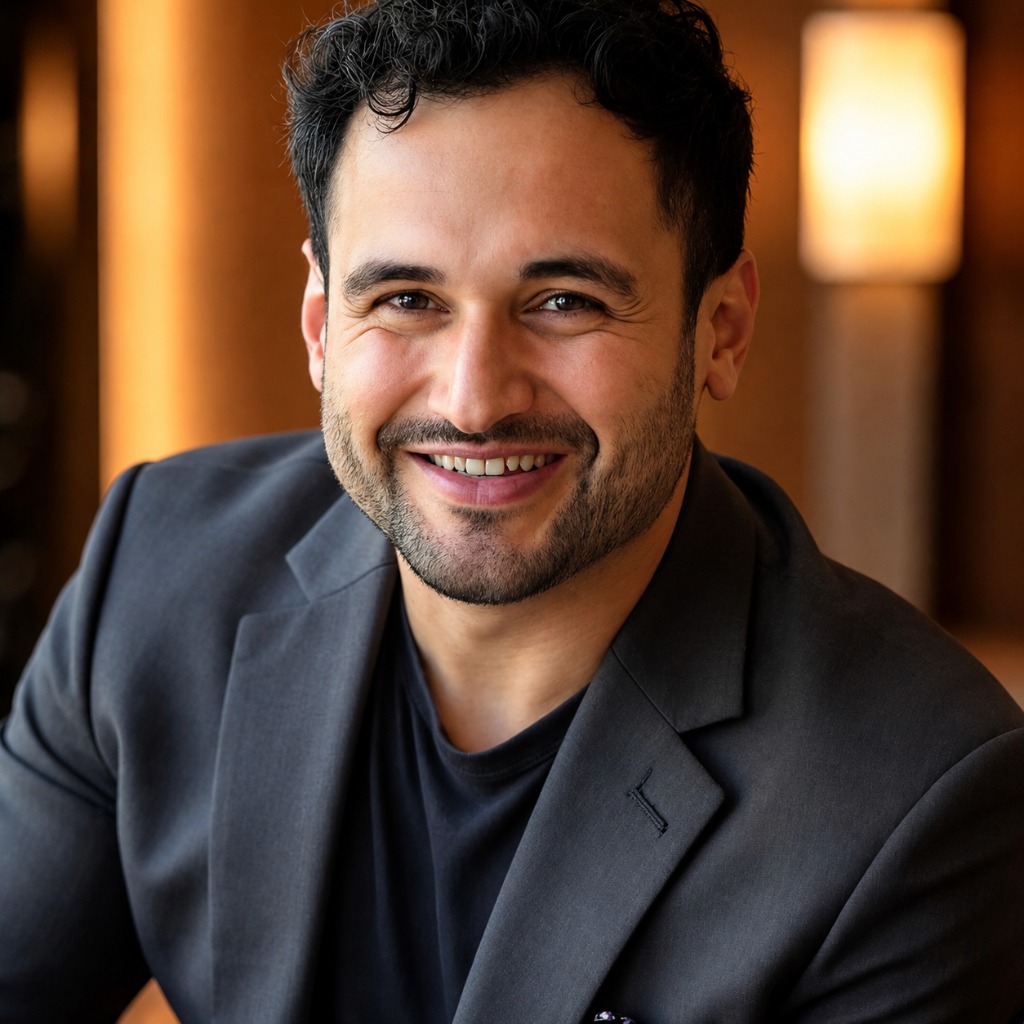
Farzad Khosravi
- 3× Founder & Fractional COOOperator background, not a credentialed outsider.
- ICF-Trained Executive CoachFormal coaching foundation behind the frameworks.
- 500+ Founders CoachedPatterns drawn from sample size, not anecdote.
- Humoniq (YC S25): $8.5M SeedFractional COO during fundraise and scale.
Farzad Khosravi is a three-time founder, fractional COO, and ICF-trained executive coach. He served as a fractional COO to high-growth companies including Humoniq (YC S25), where he helped secure an $8.5 million seed round, and earlier built the Customer Success organization at Nylas from zero through their $120 million Series C expansion.
With over 500 founders coached, Farzad has watched the same channel-selection mistakes play out across enough companies that the failure modes are nameable. The playbook above comes from the recurring ones.
The framework on this page didn't come from blog posts. It's the channel-selection rubric used in active coaching engagements, where the wrong call costs a founder a quarter. So the rules had to be precise enough to be wrong about something specific, not vague enough to be never wrong about anything.
More on the work: read the About page.
The layer underneath channel-picking
Channel selection is downstream of a decision the founder makes earlier and almost always under-examines: the decision to commit to one channel and not the others. Most founders do not have a channel-picking problem at the framework level. The framework above is not new information. They have a decision-making problem at the layer underneath. Fear of committing to the wrong channel produces the half-bet on three at once, which guarantees no channel gets the input it needs.
The decision to test a channel and not the others is the layer the rest of the work depends on. If that decision is shaky, the framework above can be perfect and the founder will still end the quarter with no channel working, because they hedged the bet before it ran.
Some founders will recognize the pattern: committing late, hedging unconsciously, picking the channel that lets them avoid the conversation with themselves about what they're actually willing to bet on. For them, the longer read is The Primal Trap. It covers what's actually happening when a high-functioning founder cannot commit to a single channel, why the threat-detection wiring fires hardest in exactly that moment, and the interruption sequence to use before the next channel-picking conversation. About 25 minutes. Free first chapter.
Stuck on which channel to pick first, or whether the failure mode you're worried about is actually the one you should be worried about? Forward your specifics to [email protected] and I'll point you at the right starting move.