
Fundability vs Investibility: VCs Fund Stories, Not Products
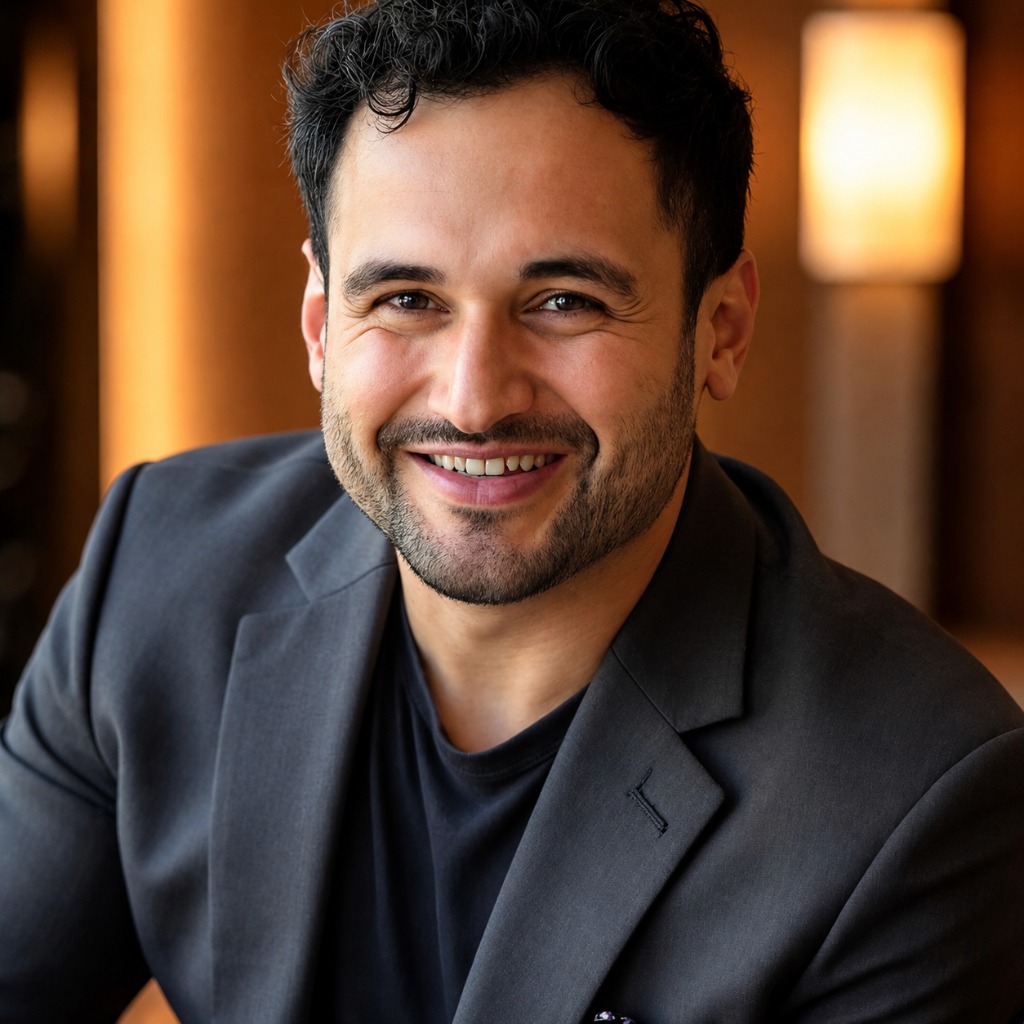
3x founder · Coach to 300+ founders

In July 2025, Todd and I sat in a DUMBO coffee shop. We had zero active users. We had zero lines of production code. We had just finished a three-week sprint. The MVP was a collection of vibe-coded templates. Yet, we raised 8.5 million dollars.
Our startup was Humoniq. We were the fourth largest seed round in a YC cohort of 124 companies. We did not build a product first. We built a narrative.
| Dimension | Investibility (Product-Market Fit) | Fundability (Narrative-Market Fit) |
|---|---|---|
| Primary Metric | Unit economics, retention, MRR | Story legibility, FOMO, category velocity |
| VC Buying Decision | Logical validation via historical data | Consensus alignment via future vision |
| Primary Asset | Software product & active users | High-signal narrative & market positioning |
| Stage Relevance | Series A and beyond (> $2M ARR) | Pre-Seed & Seed rounds ($0 to $2M ARR) |
| Founder Failure Mode | Spending 12 months coding with 0 traction | Overselling without executing post-round |
What does investibility mean?
Investibility is the case your numbers make without you in the room. Customers, revenue, retention, unit economics. A business that is logical to fund. Fundability is the other thing. Fundability is narrative-market fit, the degree to which your story matches what VCs already believe. At pre-seed you have no numbers, so the story is the entire pitch.
Founders optimize the first one and wonder why the round never closes. The two words sound like synonyms. They fund completely different rounds.
The product fallacy in startup fundraising
Most founders believe they need to build a great product to raise money. They spend six months writing code. They optimize their database. They run user tests. They focus on what they call investibility.
This is the product fallacy. You assume VCs invest in the best product. They do not. VCs invest in the most legible story in the hottest market.
If you focus on product details, you fail. VCs do not care about your database architecture. They care about consensus. By the time you finish your product, your runway is gone.
Writing code is comfortable. It is something you can do alone in your room. It makes you feel productive. But it is often a form of procrastination. You write code to avoid the uncomfortable work of selling a story to people who do not know you.
The reframe: fundability vs investibility
You must optimize for fundability. Investibility is about product-market fit, unit economics, and customer traction. These metrics matter later.
Fundability is about narrative-market fit. It is the degree to which your story fits VC consensus. You need this fit before you have code or revenue.
The runway you raise buys you the time to find the real product. If you wait to raise until the product is perfect, you die.
Investibility means you have built a business that is logical to fund. You have customers, revenue, and retention. Fundability means you have built a story that VCs are afraid to miss. At the pre-seed stage, you do not have the data to prove investibility. You only have the narrative.
I remember talking to a founder who had spent eighteen months building a collaborative design tool. He had five users. He was proud of the speed of his canvas rendering. He told me he was ready to raise. I asked him why a VC would care about canvas rendering speed when Figma exists. He had no answer. He was focusing on investibility metrics he did not have, instead of a narrative that mattered.
Why VCs fund stories
VC associates do not want to wait seven years to see if your product works. They want to look good to their partners next week. They want to get in on what is hot.
If you pitch customer utility, you lose the associate. Pitch the market momentum instead. The associate needs a story they can write in a one-page memo. They need to explain it to a partner in sixty seconds.
VC associates are evaluated on deal flow. They need to source companies that look like the companies their partners read about in TechCrunch. If the partner is obsessed with agentic AI, the associate is looking for agentic AI. If you pitch a business that makes money but does not fit that category, the associate cannot champion you. It is a simple alignment of incentives. You must give them the tools to sell you.
Paul Graham famously noted that a majority of the YC cohort had no product when they started. They raised on a hypothesis.
I saw this with Hamza, a brilliant Stanford AI scientist. Hamza built Traversaal. He had 500,000 dollars in revenue and TripAdvisor as a customer. But he could not pitch the story. VCs walked away. Meanwhile, Glean raised 260 million dollars in the same space. Hamza had the better product, but Glean had the fundability.
Hamza focused on features. He talked about search latency and data pipelines. Glean talked about the future of enterprise work. VCs do not buy latency. They buy the future. Hamza eventually ran out of runway and lost the will to continue. It was a tragedy of bad storytelling.
The four factors of fundability vs investibility
To raise early, you must optimize the four factors of narrative-market fit.
1. Position in a hot market sector
VCs fund the sector first. Right now, the hot lane is agentic AI, defense tech, and vertical SaaS with AI inside. If your sector is cold, you must reframe. Position your startup in the path of the consensus. VCs are herd animals. They run toward the noise.
The nine lanes taking the money in 2026, and the founder bar in each one, are broken down in the markets VCs are actually funding. Four of them gate on access you cannot acquire before your next raise, so check the gate before you reframe into one.
If you build a marketplace for local plumbers, do not pitch it as a plumber directory. That sector is cold. Pitch it as workflow automation for trade service professionals, powered by agentic scheduling. The underlying business is the same, but the narrative now aligns with consensus. You are not lying. You are translating your business into the language of the capital markets.
2. Force narrative legibility
You need a one-sentence pitch. It must be so simple that an associate can repeat it to a partner. Do not say you build a biotech platform. Say you build AI for biotech research. One idea, no jargon. If they cannot explain your business in ten seconds, they will not pitch it.
Your pitch must pass the coffee shop test. If you explain your business to a stranger in a coffee shop, can they repeat it to their friend five minutes later? If they say you are doing something with databases, you have failed. They should say you are building Github for databases or Stripe for data pipelines. Use high-signal analogies to bridge the gap.
The deck is where this discipline shows up first. The 10 slides investors actually read covers what partners scan for in the first 90 seconds.
3. Secure accelerator signal
Accelerators like Y Combinator reduce risk for downstream VCs. If you do not have accelerator backing, find another signal. Use Stanford degrees, ex-FAANG roles, or prior exits to anchor your credibility. Signal replaces traction when traction does not exist.
4. Lean on founder pedigree
Your background matters, but less than you think. Do not lead with your resume unless you are a household name. Lead with the narrative. Your pedigree is a validation stamp. It is not the product.
If you want your own number, the fundability calculator scores your market and your evidence separately and tells you which one is holding the round back.
How reframing saved three startups
This shift changes results quickly.
A biotech founder named Mary could not book meetings. We reframed her startup from a complex platform to AI for biotech research. VCs booked meetings the next day.
Kenza had only an idea in January. We focused on her narrative. By November, she got into Antler and raised over 1 million dollars in weeks.
Todd Sullivan, Humoniq’s co-founder and CEO, spent 25 minutes with a VC talking about being Australian in America. The VC committed 3 million dollars. They did not talk about the product. They talked about the team and the sector.
Where this advice breaks
This strategy does not apply to everyone. If you run a consumer startup, VCs will demand unit economics early. If you raise a Series A, stories are not enough. You will need real revenue and customer retention.
For pre-seed and seed rounds, narrative is your only asset.
Set up your fundraising experiment
Stop polishing your deck. Build your target list and test your narrative. Treat fundraising like a scientific experiment. Form a hypothesis, pitch it, measure the reaction, and iterate. The mechanics of the list, the outreach, and the cadence are in how to find investors and raise funding.
If you want to run the raise with me 1:1, the No BS Raise Intensive is 30 days of list, deck, and outreach work. Money back if you don’t book 10 investor meetings.
If you want to read more about founder psychology under pressure, check out The Primal Trap.
If you want to fix your pitch and book meetings in the next 30 days, book a strategy call.
Related Startup Guides
All articlesGrow
The 9 Markets VCs Are Actually Funding in 2026
AI took 86% of US venture dollars in 2026. That does not make your AI startup fundable. The 9 markets VCs are funding, and the exact bar in each.
Grow
Startup Pitch Deck: 10 Slides Investors Read
What investors actually look at in a startup pitch deck: the 10 slides that matter, what kills each one, and a copy-paste framework you can run today.
Scale
How to Write a Startup Business Plan That Investors Will Actually Read
Investors don't read 40-page business plans. They read the 1-page version that proves the hard trade-offs. The structure that earns the second meeting.

Farzad Khosravi
No BS Startup Coach · 300+ Founders Coached
I help early-stage founders launch, grow, and lead with clarity. I cut through the noise to the few tactics that actually change your numbers. I've coached 300+ founders across validation, growth, leadership, and fundraising.